Minister of Information Meets Visiting Journalists from UK and Several Arab Countries
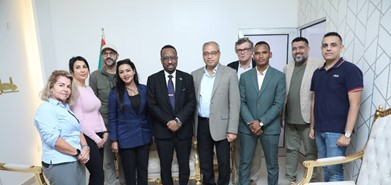
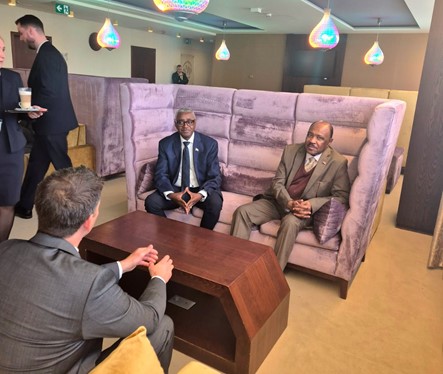
Minister of Culture, Information and Tourism Khalid Al-Eisir on Thursday met in his Port Sudan office with a delegation of independent journalists from the United Kingdom and several Arab countries who arrived in Sudan to observe the humanitarian situation firsthand and report on the suffering of displaced communities in affected regions.
During the meeting, the delegation conducted an extensive interview with the Minister, who provided a detailed briefing on the efforts undertaken by the State and local institutions to address current challenges. He noted that the phase requires broad international and regional cooperation to help alleviate the humanitarian crisis. The Minister underscored the vital role of journalists in “reflecting the truth and conveying the reality to the world with professionalism and responsibility.” He also highlighted the Ministry’s efforts to mitigate the psychological impact of the war on citizens, as well as its work to rehabilitate media and cultural institutions damaged by the conflict.
Al-Eisir commended what he described as “the significant role played by Sudanese journalism,” noting that despite difficult conditions, it continues to amplify citizens’ voices and shed light on the plight of displaced persons (IDPs) and the assistance being provided to them. He also welcomed cooperation with international institutions to help enhance the professional capacity of media workers in Sudan.
For their part, the visiting journalists expressed appreciation for the warm reception, affirming their commitment to presenting an accurate picture of the situation of displaced persons and highlighting the work of local organizations and initiatives. They noted that their visit includes several field locations to assess the scale of humanitarian challenges on the ground.
The meeting comes as part of the Ministry’s efforts to strengthen engagement with international media outlets and encourage professional coverage of developments in Sudan.